
There is a particular kind of evening in late summer when the light goes gold around six o'clock and the kitchen still smells of the basil on the windowsill. That is the evening this chicken pesto pasta belongs to – the one where you want something warm and generous but you also want to sit down before the sun disappears entirely.
The chicken here is the anchor: cut into strips, it sears fast and picks up a deep golden edge that keeps the whole dish from feeling soft. The pesto is the perfume – basil, garlic and toasted pine nuts loosened with a little pasta water so it clings to every spiral instead of pooling at the bottom of the bowl. Parmesan melts in last, thickening the sauce just enough to coat the fusilli in a quiet, glossy layer.
You will hear the chicken sizzle and then go still, and that stillness is your cue. The pasta water should taste faintly of salt, the pesto should smell sharp and green the moment it hits the warm pan. Nothing here needs rushing.
Why You'll Love This Recipe
About the Ingredients
500 g (1 lb) boneless, skinless chicken breast, cut into 1 cm strips
Chicken thigh works beautifully here too and stays juicier if you tend to overcook breast meat. Look for breasts that feel springy rather than soft when pressed through the package.
350 g (12 oz) fusilli or penne pasta
Fusilli's spirals trap the pesto in every groove; penne is a good substitute if that is what is in the cupboard. Weigh rather than guess – a little extra pasta thins the sauce noticeably.
2 tbsp olive oil
Regular olive oil is fine for searing; save the expensive cold-pressed oil for drizzling at the end. If you only have butter, use half butter and half oil so the butter does not burn.
3 tbsp (about 45 g) basil pesto, store-bought or homemade
Refrigerated fresh pesto from the deli counter tastes far greener than the shelf-stable jar. If yours is very oily, stir it well before measuring so the basil and oil are evenly distributed.
120 ml (1/2 cup) heavy cream or whole milk
Cream gives a silkier sauce, but whole milk plus an extra spoon of parmesan works well and keeps it lighter. Avoid skim milk – it will split when it meets the hot pan.
50 g (1/2 cup) freshly grated parmesan
Grate it yourself from a wedge; pre-shredded parmesan has starch on it and clumps instead of melting. Pecorino is a sharper, saltier substitute – reduce the added salt if you use it.
2 garlic cloves, finely minced
Fresh garlic, not powder, gives the sauce its backbone. If the cloves are old and dry, use three – the flavor fades with age.
150 g (1 cup) cherry tomatoes, halved
They burst and sweeten the sauce as they warm through. In winter, swap in a handful of sun-dried tomatoes packed in oil for a deeper, jammier note.
1/2 tsp fine sea salt, plus more for the pasta water
Salt the water generously – it is the only chance to season the pasta itself. Flaky salt at the table is a different job entirely.
1/4 tsp freshly ground black pepper
Grind it just before it goes in; pre-ground pepper tastes dusty. A pinch of chili flakes alongside is a good idea if you like a little heat.
A handful of fresh basil leaves, to finish
Torn, not chopped, so the edges do not bruise and darken. If basil is out of season, a little flat-leaf parsley and a squeeze of lemon will do the work.
Tips & Tricks
Do not drain the pasta dry
reserve a full cup of the starchy cooking water before you drain, because that water is what turns pesto into a sauce that coats instead of slides.
Undercook the pasta by one minute
it finishes in the sauce and absorbs flavor instead of turning soft and floury.
- Keep the heat moderate when the pesto goes in: pesto is delicate and turns bitter over high heat, so stir it into a warm – not screaming – pan off the strongest flame.
- Season the chicken before it hits the pan, not after: salt drawn into the meat early keeps it juicy, and salting at the end just sits on the surface.
Pro Tips
Step-by-Step Instructions
1. Boil the pasta
Bring a large pot of generously salted water to a rolling boil and cook the fusilli for 1 minute less than the package says. Before draining, scoop out 240 ml (1 cup) of the cloudy cooking water and set it aside – it is the secret to a creamy sauce.
2. Dry and season the chicken
While the water heats, pat the chicken strips completely dry and season with the salt and pepper. Let them sit for 5 minutes so the seasoning settles in.
3. Sear the chicken
Heat the olive oil in a large skillet over medium-high heat, about 190°C (375°F), until it shimmers. Add the chicken in a single layer and cook 5 to 6 minutes, turning once, until deeply golden brown on both sides and the thickest piece reads 74°C (165°F) on a thermometer.
4. Soften the garlic and tomatoes
Lower the heat to medium, push the chicken to one side, and add the garlic and cherry tomatoes. Cook 2 to 3 minutes, until the garlic smells sweet and the tomatoes just begin to slump and release their juice – do not let the garlic brown.
5. Build the sauce
Pour in the cream and bring to a gentle simmer, about 90°C (195°F), for 2 minutes until it thickens slightly and bubbles lazily at the edges. Stir in the pesto off the strongest heat and let it warm through for 30 seconds.
6. Bring it together
Add the drained pasta to the pan with a splash of the reserved pasta water. Toss over medium heat for 1 to 2 minutes, adding more water a spoon at a time, until the sauce coats every spiral and no liquid pools in the pan.
7. Finish with parmesan
Pull the pan off the heat and stir in the parmesan until it disappears into the sauce. Taste, adjust the salt, and scatter torn basil over the top.
8. Rest and serve
Let the pan sit for 2 minutes so the sauce settles and clings, then serve straight away in warm bowls. The pasta waits for no one.
Delicious Variations
Sun-dried tomato and spinach
fold in a handful of spinach at the end so it wilts in the residual heat, and use oil-packed sun-dried tomatoes instead of cherry ones.
Lemon and ricotta
swap the cream for 100 g of ricotta and the zest of a lemon for a brighter, spring-like sauce that holds up in warmer months.
Autumn version
replace the cherry tomatoes with roasted butternut squash cubes and a pinch of nutmeg, and finish with toasted walnuts instead of basil.
How to Store Perfektes Chicken Pesto Pasta Rezept
Refrigerator
Keep in an airtight container for up to 3 days. The sauce thickens when cold, so reheat with a spoonful of water or milk.
Freezer
Freeze the sauce and chicken without the pasta for up to 2 months; pasta turns soft and grainy in the freezer.
Reheating
Warm gently in a covered pan over low heat with a splash of water, stirring until glossy again – about 4 to 5 minutes. Avoid the microwave, which toughens the chicken.
Frequently Asked Questions
Q: Can I make chicken pesto pasta without cream?
Yes – the reserved pasta water alone will emulsify with the pesto into a creamy sauce. Add it a spoon at a time while tossing off the heat, and finish with an extra spoon of parmesan for body.
Q: Why did my pesto pasta turn bitter?
Pesto turns bitter when it is cooked too hard, so stir it in off the heat or over low warmth only. Burnt garlic is the other culprit – keep the pan at medium and pull it the moment the garlic smells sweet.
Q: How do I stop the chicken from drying out?
Sear it hot and fast and pull it at 74°C (165°F) internal, then let it rest while the sauce comes together. Cutting the strips evenly, about 1 cm thick, also keeps them from cooking at different speeds.
Q: Can I use jarred pesto instead of fresh?
Absolutely – use a good refrigerated jarred pesto and taste before adding extra salt, since jarred versions are usually saltier. A squeeze of lemon and a few fresh basil leaves will wake it up.
Q: What pasta shape is best for pesto?
Fusilli, trofie or penne work best because their ridges and hollows hold the sauce. Long noodles like spaghetti are fine but the pesto tends to slide to the bottom of the bowl.
If you make this tonight, tell me how the kitchen smelled when the pesto hit the pan – that is my favorite part. Save the recipe for the evenings when you need something warm and quick, and share it with the person who always asks what is for dinner.
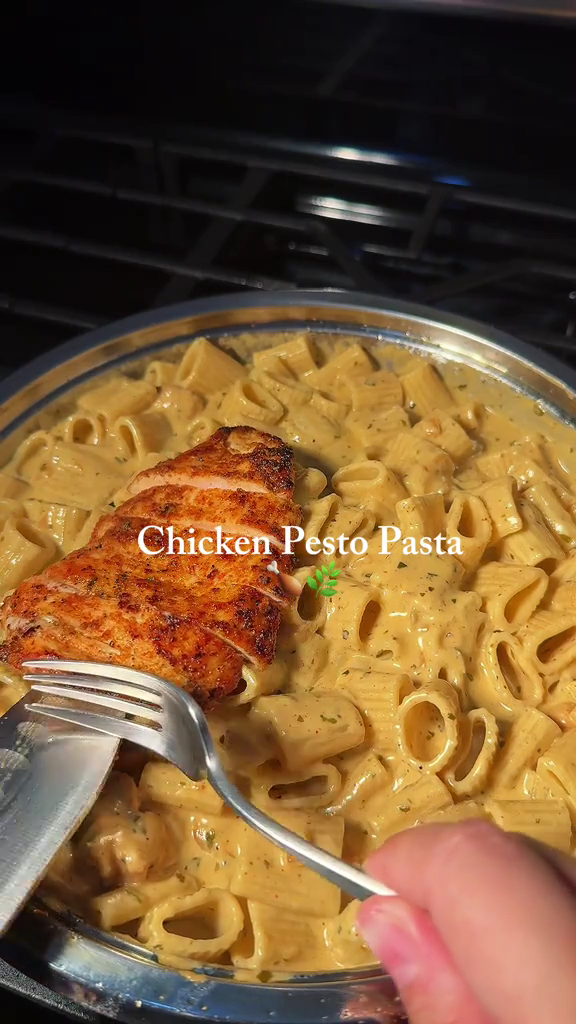
Perfektes Chicken Pesto Pasta Rezept
Creamy chicken pesto pasta with golden seared chicken, basil pesto and parmesan – one pan of comfort ready in 30 minutes for tonight.
🧂 Ingredients
- 500 g (1 lb) boneless, skinless chicken breast, cut into 1 cm strips
- 350 g (12 oz) fusilli or penne pasta
- 2 tbsp olive oil
- 3 tbsp (about 45 g) basil pesto, store-bought or homemade
- 120 ml (1/2 cup) heavy cream or whole milk
- 50 g (1/2 cup) freshly grated parmesan
- 2 garlic cloves, finely minced
- 150 g (1 cup) cherry tomatoes, halved
- 1/2 tsp fine sea salt, plus more for the pasta water
- 1/4 tsp freshly ground black pepper
- A handful of fresh basil leaves, to finish
📋 Instructions
- 1Boil the pasta — Bring a large pot of generously salted water to a rolling boil and cook the fusilli for 1 minute less than the package says. Before draining, scoop out 240 ml (1 cup) of the cloudy cooking water and set it aside – it is the secret to a creamy sauce.
- 2Dry and season the chicken — While the water heats, pat the chicken strips completely dry and season with the salt and pepper. Let them sit for 5 minutes so the seasoning settles in.
- 3Sear the chicken — Heat the olive oil in a large skillet over medium-high heat, about 190°C (375°F), until it shimmers. Add the chicken in a single layer and cook 5 to 6 minutes, turning once, until deeply golden brown on both sides and the thickest piece reads 74°C (165°F) on a thermometer.
- 4Soften the garlic and tomatoes — Lower the heat to medium, push the chicken to one side, and add the garlic and cherry tomatoes. Cook 2 to 3 minutes, until the garlic smells sweet and the tomatoes just begin to slump and release their juice – do not let the garlic brown.
- 5Build the sauce — Pour in the cream and bring to a gentle simmer, about 90°C (195°F), for 2 minutes until it thickens slightly and bubbles lazily at the edges. Stir in the pesto off the strongest heat and let it warm through for 30 seconds.
- 6Bring it together — Add the drained pasta to the pan with a splash of the reserved pasta water. Toss over medium heat for 1 to 2 minutes, adding more water a spoon at a time, until the sauce coats every spiral and no liquid pools in the pan.
- 7Finish with parmesan — Pull the pan off the heat and stir in the parmesan until it disappears into the sauce. Taste, adjust the salt, and scatter torn basil over the top.
- 8Rest and serve — Let the pan sit for 2 minutes so the sauce settles and clings, then serve straight away in warm bowls. The pasta waits for no one.

Nora asks the questions that make a recipe stronger. She studies techniques, compares ingredients, and repeats every method until the instructions feel natural and the result earns its place at your table.